
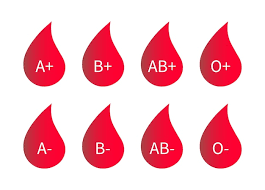
The distribution of blood types among the world population is as follows:
O⁺ (O Positive): 42%
A⁺ (A Positive): 31%
B⁺ (B Positive): 15%
AB⁺ (AB Positive): 5%
O⁻ (O Negative): 3%
A⁻ (A Negative): 2.5%
B⁻ (B Negative): 1%
AB⁻ (AB Negative): 0.5%
At first glance, one thing becomes clear: positive blood types dominate globally, while negative blood types are significantly rarer.
What Determines Your Blood Group? Your blood type is inherited genetically from your parents. It is defined by two major systems: 1. ABO Blood Group System. This system classifies blood into four main types: Type A, Type B, Type AB, and Type O. These are determined by the presence or absence of antigens on the surface of red blood cells. 2. Rh Factor (Positive or Negative) The Rh factor indicates whether your blood is positive (+) or negative (−). If your blood contains the Rh protein, you are Rh positive.
Why Is O⁺ the Most Common Blood Type? O⁺ accounts for nearly half of the world’s population, making it the most common blood group. There are a few reasons behind this: Genetic dominance: The genes responsible for O and Rh-positive traits are more widespread. Evolutionary advantage: Some research suggests that type O blood may have offered better resistance to certain diseases in ancient times. Migration patterns: As humans migrated and populations mixed, O⁺ became more widespread globally.
The Rarity of Negative Blood Types Negative blood types, especially AB⁻ (only 0.5%), are extremely rare. This rarity is mainly due to genetics: The Rh-negative trait is recessive, meaning both parents must carry it. It is more common in certain regions, especially Europe, but less frequent in Asia and Africa. Because of this, blood banks often face shortages of negative blood types, particularly O⁻Why Blood Type Distribution Matters. Understanding blood group distribution is not just interesting—it has real-world importance: 1. Blood Transfusions. In emergencies, matching blood types is critical. Some key facts: O⁻ is known as the universal donor, meaning it can be given to almost anyone.
This makes rare blood types extremely valuable in medical situations. 2. Blood Donation Awareness Since O⁺ and A⁺ are the most common, they are frequently needed. However, Rare blood types like AB⁻ are often in short supply. Blood banks must carefully manage inventory to ensure availability. Encouraging people to donate regularly helps maintain a stable supply. 3. Pregnancy and Rh Compatibility The Rh factor plays a crucial role during pregnancy. If a mother is Rh-negative and the baby is Rh-positive, complications can occur. Proper medical care and injections can prevent risks, but awareness is essential.
Regional Variations in Blood Types Although the percentages above represent global averages, blood group distribution varies by region: Asia (including Pakistan): Higher prevalence of B⁺ , Europe: More A and Rh-negative types, Africa: Higher O blood group frequency, Americas: Mixed distribution due to migration. This diversity reflects human evolution, migration, and genetic mixing over thousands of years.
Interesting Facts About Blood Groups AB⁻ is the rarest blood type in the world. O⁺ is the most commonly requested blood type in hospitals. Blood type can sometimes influence susceptibility to certain diseases. Some studies suggest links between blood type and personality, though this is not scientifically proven.
The Importance of Blood Donation. No matter what your blood type is, every donation counts. However, people with rare blood types have an especially important role to play. If you know your blood group, consider donating regularly. You could save lives—especially in emergencies where every second matters.
Final Thoughts: Blood group distribution across the world tells a fascinating story about human genetics, evolution, and survival. While O⁺ dominates globally, the presence of rare blood types highlights the importance of diversity in our genetic makeup. More importantly, understanding these differences helps us build better healthcare systems, improve emergency response, and encourage life-saving blood donations. So next time you think about blood types, remember—it’s not just biology. It’s a global network of life, connection, and survival.